Gift Guides That Actually Support Mental Health
Thoughtful ways to show up this season
At Life+Able Therapy, I often talk about support not as something we do, but as something we offer. When someone is struggling, changing, grieving, or simply feeling alone, what helps most isn’t the perfect phrase or a polished solution — it’s being met with care that feels attuned and human.
So many “mental health gift guides” focus on aesthetics or productivity. But real support is quieter. It helps regulate the nervous system, reduces isolation, and makes space for what someone is already carrying.
The guides below are rooted in that idea — gifts and gestures that say, “I see you, and you don’t have to go through this alone.”
What Makes a Gift Truly Supportive?
Supportive gifts tend to do at least one of the following:
Help the body feel steadier or safer
Offer orientation during uncertainty or change
Reduce emotional or practical load
Make invisible experiences feel acknowledged
Communicate care without pressure to respond or perform
A meaningful gift doesn’t fix what’s hard. It simply meets it with respect.
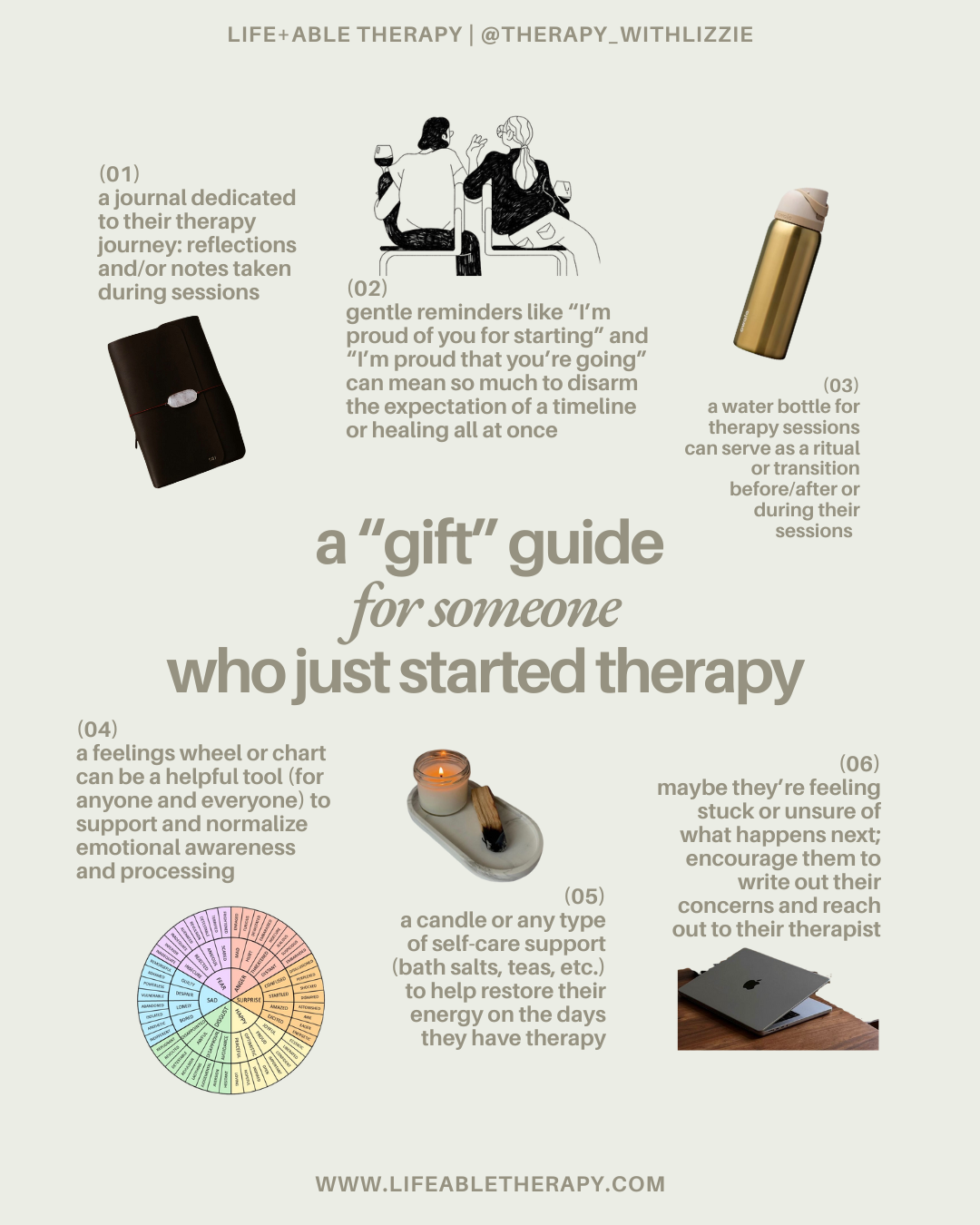
For Someone Who Just Started Therapy
Beginning therapy is brave — and often more emotionally activating than expected. Early therapy isn’t about “breakthroughs”; it’s about showing up and staying.
Support here should create containment, not pressure.
Thoughtful tangible gifts:
Therapy-designated notebook and pen
Grounding object to bring to and from sessions
Post-session ritual items (tea, snack, calming scent)
Emotion cards or feelings wheel — especially when words are hard
Index cards for one takeaway per session
What this says:
“You don’t have to do this perfectly. Beginning is enough.”
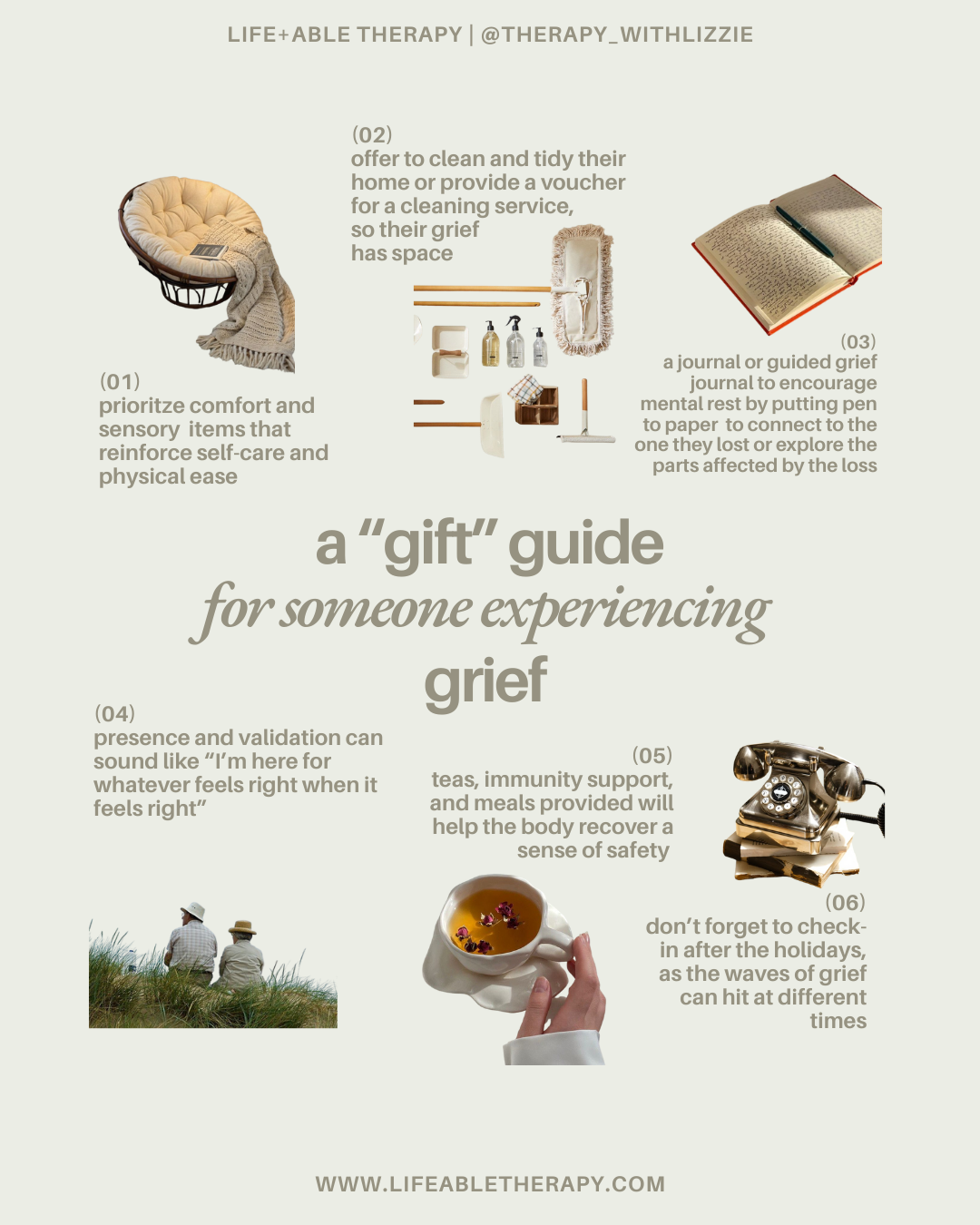
For Someone Experiencing Grief
Grief isn’t a problem to solve — it’s an experience to be witnessed. Support that helps most doesn’t rush healing or reframe loss.
It honors connection, memory, and presence.
Thoughtful tangible gifts:
Memory objects (photo frames, keepsakes, small boxes for reminders)
Candles or ritual items for remembrance
Blank or lightly guided grief journals
Comfort items (soft blankets, warm mugs, gentle textures)
Meal support or practical help long after others stop offering
What this says:
“I remember. I’m here. You don’t have to move on.”
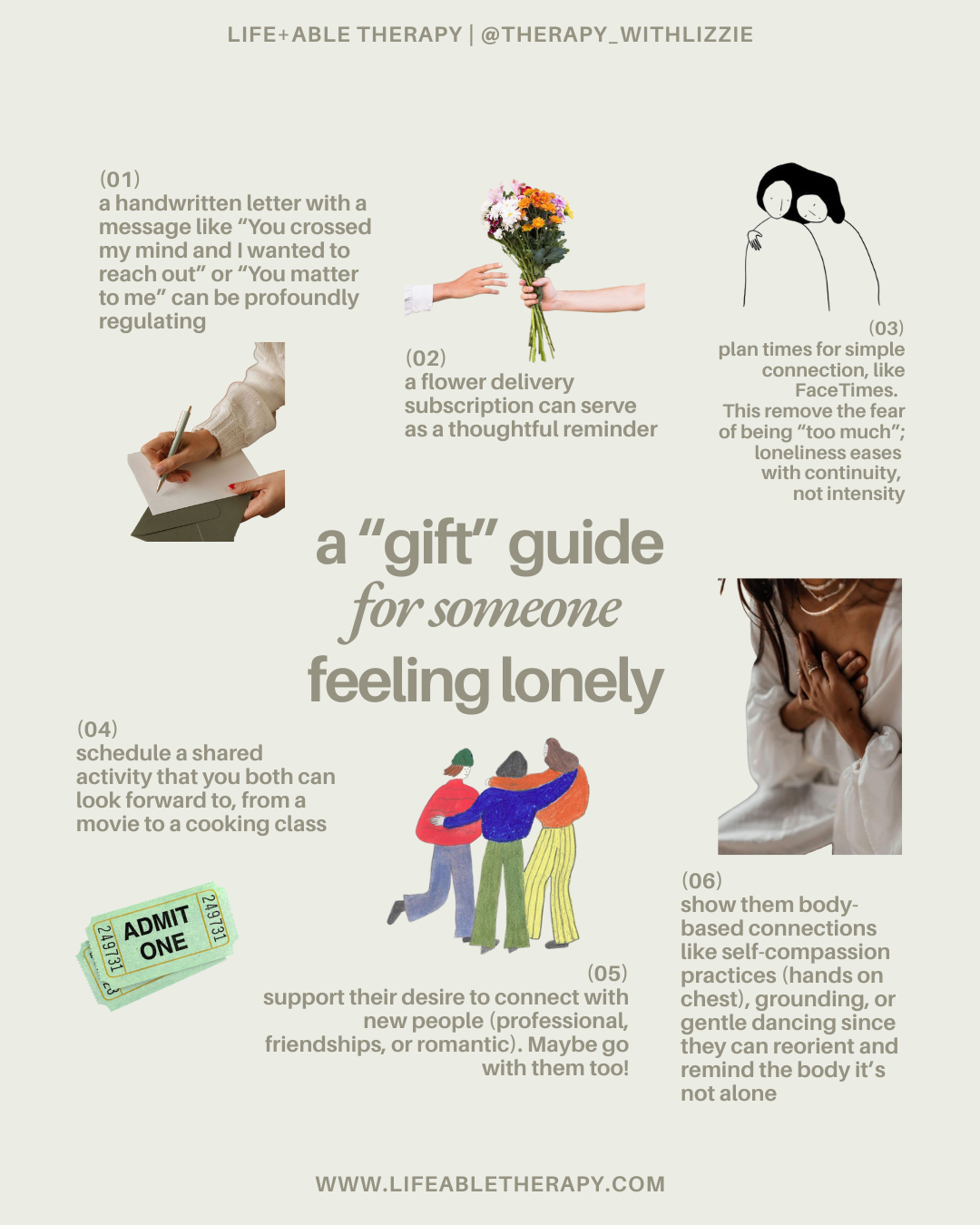
For Someone Feeling Lonely
Loneliness isn’t just about being alone — it’s about feeling unseen. Especially during the holidays or quiet seasons, support needs to be steady and low-pressure.
Thoughtful tangible gifts:
Handwritten notes or letters (especially unexpected ones)
Shared rituals (weekly walk, coffee date, check-in time)
Books, puzzles, or activities that invite gentle engagement
Care packages that don’t require reciprocation
Open-ended invitations without obligation
What this says:
“You matter. You’re not forgotten.”
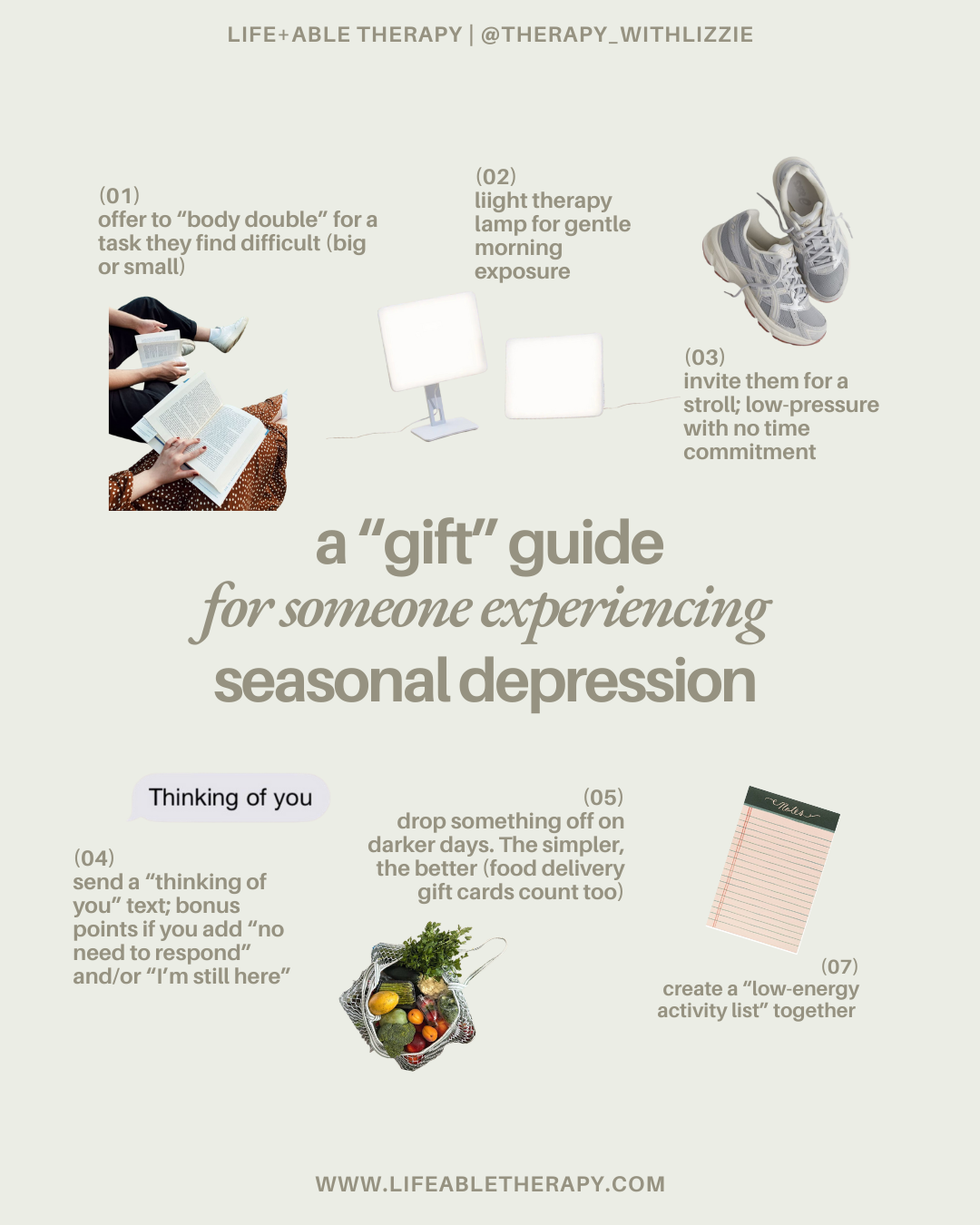
For Someone Experiencing Seasonal Depression
Seasonal shifts affect energy, mood, motivation, and circadian rhythm. Support here works best when it’s practical and regulating, not motivational.
Thoughtful tangible gifts:
Light therapy lamps or sunrise alarm clocks
Vitamin-D-supportive tools (as appropriate, non-prescriptive)
Visual timers to gently support routine
Warm sensory items (heated wraps, cozy socks, mugs)
Low-effort connection offers — brief walks, quiet company
What this says:
“This season is hard. You don’t have to push through it alone.”
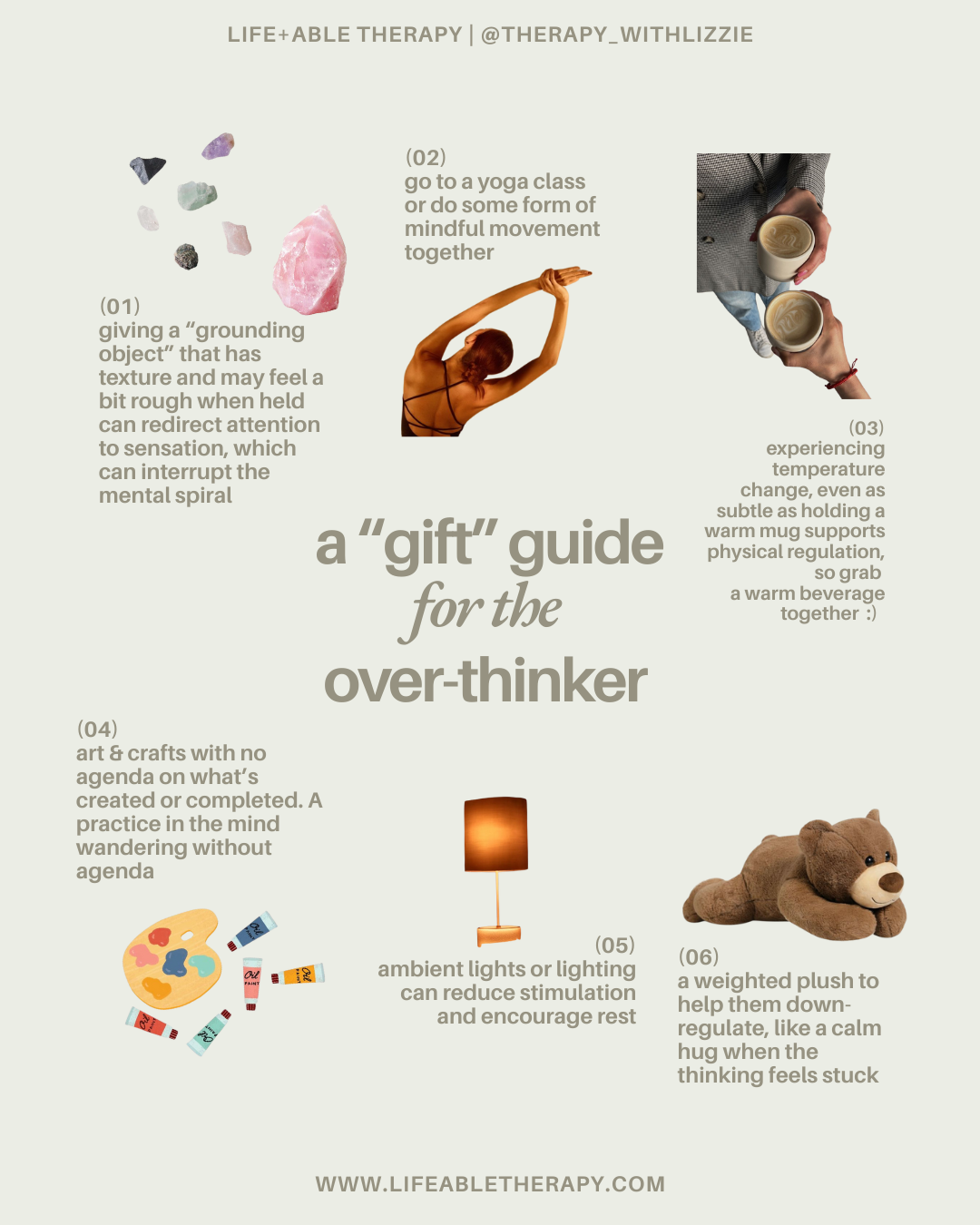
For Someone Who Over-Intellectualizes
Some people live in their heads — trying to analyze their way to relief. But meaningful change often happens through the body first.
Here, gifts focus on embodiment and sensory engagement.
Thoughtful tangible gifts:
Textured grounding objects — stones, fidget rings, knit pieces.
Temperature tools — cold packs, warm wraps, mugs that feel good in the hand.
Breath cue cards or gentle movement prompts — meeting the body first.
Sound or tactile tools — quiet noise machines, auditory patterns that ease intensity.
What this says:
“You don’t have to figure it out. You can feel it first.”
Why Some of These Guides Overlap — and Why That’s Human
Many experiences share nervous-system needs: safety, steadiness, connection, relief. Overlap doesn’t mean redundancy — it reflects how human experiences intersect.
What matters most is the lens:
Orientation vs. exhaustion
Witnessing vs. fixing
Presence vs. pressure
When support is attuned, it lands.
Sometimes the Most Meaningful Gift Is Presence and Time…
Checking in without expecting a response
Sitting quietly without trying to help
Remembering important dates or seasons
Saying, “I’m here,” and meaning it
Presence, when it’s consistent and non-demanding, can be deeply regulating.
A Final Thought
Support doesn’t need to be impressive. It just needs to be intentional.
When we choose gifts — or words, or actions — that respect where someone actually is, we communicate something powerful:
You don’t have to be okay for me to stay.
And that, in itself, is healing.
